

Can a deep foundation drill rig be used in rocky ground? That's a question I get asked a lot as a supplier of Deep Foundation Drill Rig. And the short answer is yes, but it's not that simple. Let me break it down for you.
First off, what exactly is a deep foundation drill rig? Well, it's a heavy - duty piece of equipment designed to drill deep holes into the ground for various construction projects. Whether it's for building bridges, high - rise buildings, or large industrial structures, these rigs play a crucial role in laying the foundation.
Now, when it comes to rocky ground, things get a bit tricky. Rocky ground presents unique challenges compared to softer soil or sediment. Rocks are hard, abrasive, and can vary greatly in terms of their composition and strength. But don't worry, modern deep foundation drill rigs are built to handle these challenges.
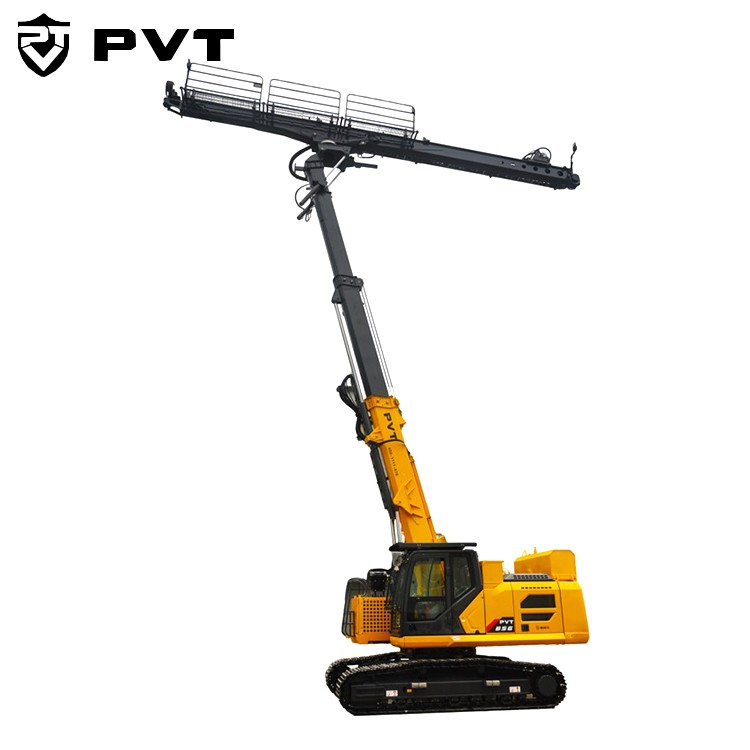

One of the key features of a good deep foundation drill rig for rocky ground is its powerful drilling mechanism. Most rigs are equipped with high - torque motors and specialized drill bits. These drill bits are made from super - hard materials like tungsten carbide or diamond - tipped alloys. The high - torque motor provides the necessary force to break through the rock, while the tough drill bit withstands the abrasion.
For instance, some of the Anchor Drilling Machine models we supply are specifically designed for rocky terrains. They have adjustable drilling speeds, which is really important. When you first encounter a rock, you might want to start at a slower speed to get a good grip and start the penetration process. As the drill bit gets deeper into the rock, you can gradually increase the speed for more efficient drilling.
Another aspect is the rig's stability. When drilling in rocky ground, there's a lot of vibration and resistance. A wobbly rig can not only cause inaccurate drilling but also pose a safety risk. Our deep foundation drill rigs are built with a robust base and advanced stabilization systems. These systems use hydraulic jacks or outriggers to keep the rig firmly in place during the drilling process. This ensures that the drill bit goes straight down and that the hole is drilled to the required specifications.
But it's not just about the hardware. The operator also plays a vital role. An experienced operator knows how to read the rock formations. Different types of rocks require different drilling techniques. For example, sedimentary rocks like limestone might be a bit easier to drill through compared to igneous rocks like granite. The operator needs to adjust the drilling parameters accordingly, such as the pressure applied, the rotation speed, and the type of drilling fluid used.
Speaking of drilling fluid, it's an essential part of the process, especially in rocky ground. Drilling fluid, often a mixture of water and special additives, serves several purposes. It helps to cool the drill bit, reducing wear and tear. It also carries the rock cuttings to the surface, preventing them from clogging the drill hole. And it provides some lubrication, making the drilling process smoother.
Now, let's talk about the limitations. While deep foundation drill rigs can be used in rocky ground, there are some extreme cases where they might face difficulties. For example, if the rock is extremely hard, like some types of quartzite, it might take a long time to drill through, and the drill bit might wear out quickly. In such cases, additional techniques like pre - fracturing the rock using explosives or mechanical means might be required.
Also, the depth of the rock layer matters. If the rock layer is very thick, continuous drilling for a long time can put a lot of stress on the rig components. Regular maintenance and inspection become even more crucial in these situations.
In terms of cost, using a deep foundation drill rig in rocky ground can be more expensive. The wear and tear on the drill bits and other components are higher, so you'll need to replace them more frequently. The drilling process might also take longer, which means higher labor costs. But in the long run, having a properly drilled foundation in rocky ground is worth the investment as it ensures the stability and longevity of the structure.
If you're involved in a project that requires drilling in rocky ground, you might also be interested in our Drilling Machine Bore Pile. These machines are great for creating large - diameter bore piles, which are often used in deep foundations. They have similar features to the deep foundation drill rigs but are optimized for larger - scale projects.
In conclusion, a deep foundation drill rig can definitely be used in rocky ground. With the right equipment, an experienced operator, and proper techniques, you can successfully drill deep holes in even the toughest rock formations. If you're in the market for a reliable deep foundation drill rig or have any questions about using them in rocky ground, don't hesitate to reach out. We're here to help you make the right choice for your project. Whether it's a small - scale construction or a large - scale infrastructure project, we've got the solutions you need.
References
- Construction Equipment Handbook: Drilling in Challenging Terrains
- Journal of Geotechnical and Geoenvironmental Engineering: Drilling Techniques in Rocky Ground
